 Skip to content
Preface: Precision Matters! It’s “Electronic Control,” Not Just “Electronic Injection”
Electronically controlled fuel injection technology has been on the market for many years. While many people habitually refer to these as “Electronic Injection Diesel Engines,” the technically accurate term is Electronically Controlled Diesel Engine.
There are currently three primary types of this technology: High-Pressure Common Rail (HPCR), Unit Injector System (UIS), and Unit Pump System (UPS). Here is a brief introduction to these three systems.
1. High-Pressure Common Rail (HPCR)
—— The Dominant Standard in China
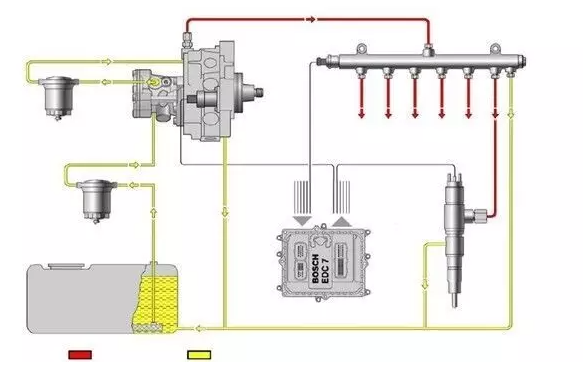
- Mechanism: This is a closed-loop system consisting of a high-pressure fuel pump, pressure sensors, and an ECU. Its defining feature is that the generation of injection pressure is completely separated from the injection process.
- Advantages: Diesel is injected at the precise pressure, timing, and volume to ensure the best combustion ratio and atomization, leading to superior fuel economy.
2. Unit Injector System (UIS / Pump-Nozzle)
—— The European Favorite
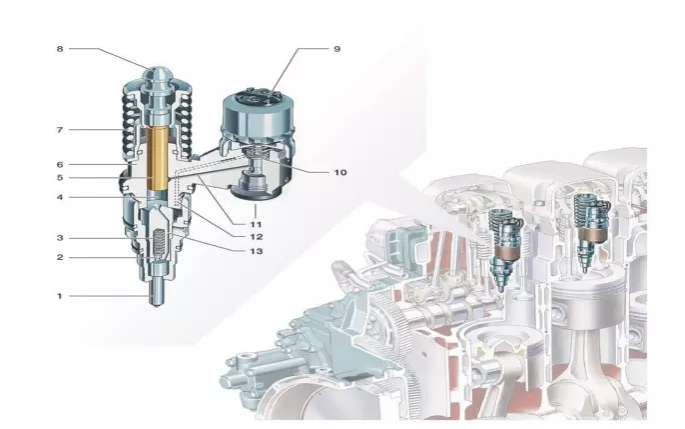
- Mechanism: The fuel pump, control unit, and nozzle are integrated into a single unit, eliminating high-pressure fuel lines. It is driven directly by the camshaft.
- Advantages: By eliminating fuel lines, it removes the impact of pressure waves and fuel compression, allowing for the easy generation of extremely high injection pressures.
3. Unit Pump System (UPS)
—— The “Close Cousin” of the Unit Injector
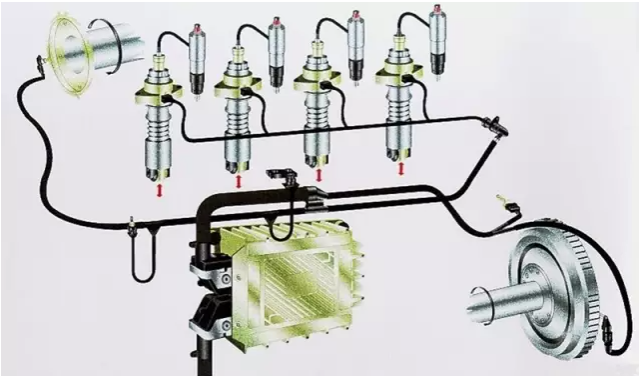
- Mechanism: Similar to the unit injector, but the pump and nozzle are separate. The individual pumps are mounted on the engine block and connected to the nozzles via short pipes.
- Advantages: Driven by the camshaft with one pump per cylinder, it offers a robust alternative that balances high-pressure performance with modular maintenance.
Strategic Support for Genuine Engine Parts: WhatsApp/WeChat: +86 19050562894